High indoor humidity and South Texas heat allow German cockroaches to multiply rapidly once introduced into a structure. Unlike perimeter invaders such as striped bark scorpions or smoky brown roaches, German…
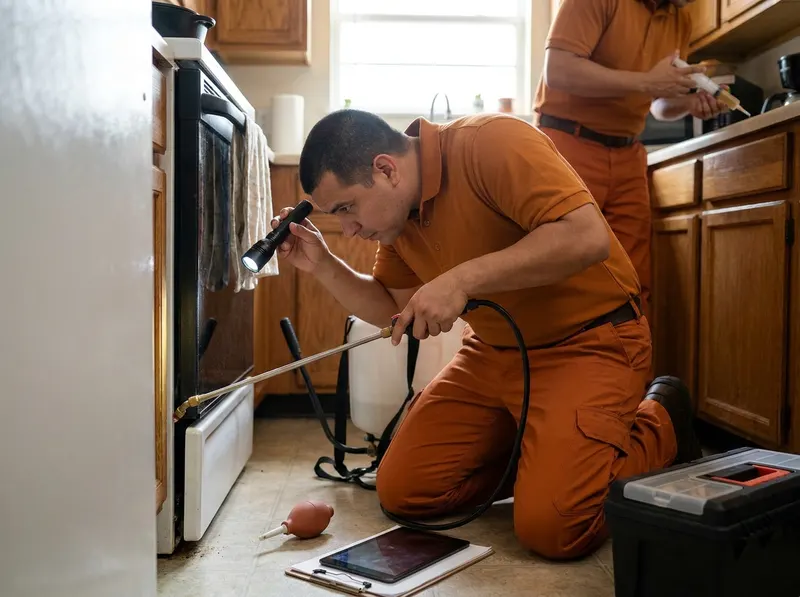
High indoor humidity and South Texas heat allow German cockroaches to multiply rapidly once introduced into a structure. Unlike perimeter invaders such as striped bark scorpions or smoky brown roaches, German cockroaches nest exclusively indoors near moisture, food debris, and warm electrical motors. Attempting to eradicate an active population with consumer aerosol foggers scatters insects deeper into drywall voids and adjacent rooms in Medical Center apartments or historic homes in Monte Vista and Southtown. A dedicated clean-out employs non-repellent chemistries and juvenile hormone mimics that halt nymph development, systematically collapsing the colony.
Technicians target hidden harborage zones throughout the property. Application focuses on refrigerator compressor housings, under-sink plumbing collars, dishwasher kickplates, and cabinet joints in residential kitchens from Stone Oak to King William. Treatments place professional baits and micro-encapsulated residuals strictly into narrow structural voids inaccessible to pets and children, ensuring household safety while maintaining continuous lethal exposure for foraging insects.
An intensive clean-out requires clear property preparation, including removing items from target cabinets and cleaning residual grease behind cooking appliances. While general quarterly spraying maintains outdoor perimeter barriers, an established German cockroach infestation demands this concentrated, two-phase eradication protocol to destroy emerging egg cases within 14 to 21 days.
Every job gets a firm, written price after a free on-site visit.
Tell us about your german cockroach clean-out service job in San Antonio and we'll send a clear, written quote — usually the same day.
 Velnaro Pest Defense Services